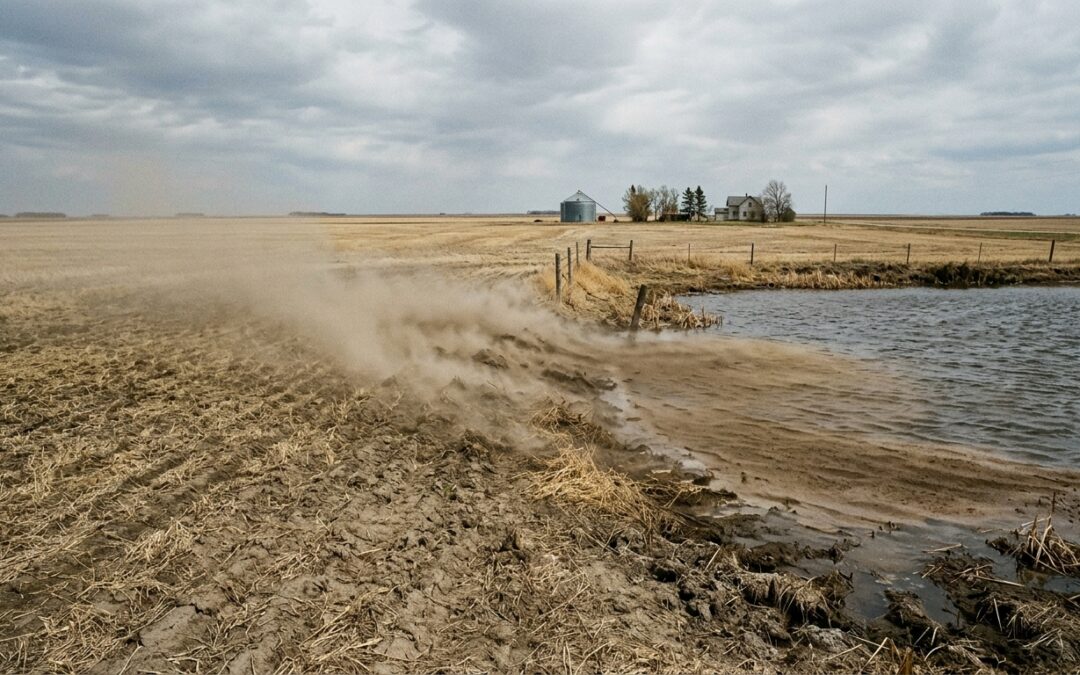









A powerful prairie dust storm can leave more than just a dramatic sky—it impacts your pond’s health. Learn how airborne sediment, nutrients, and organic debris affect water quality and what steps to take after the storm.
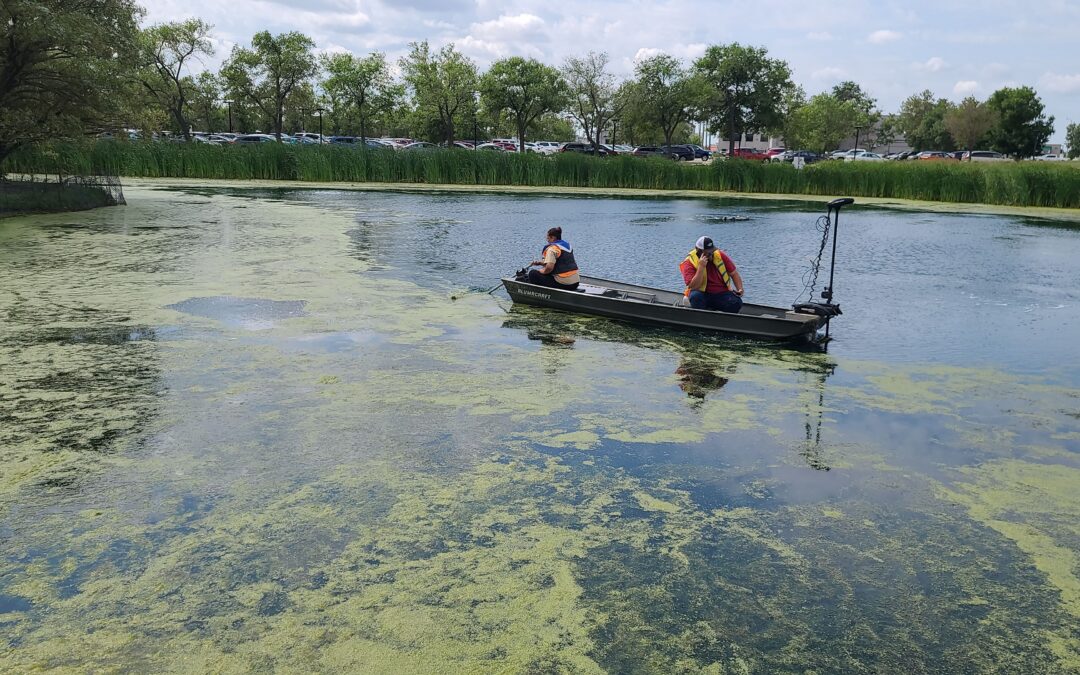
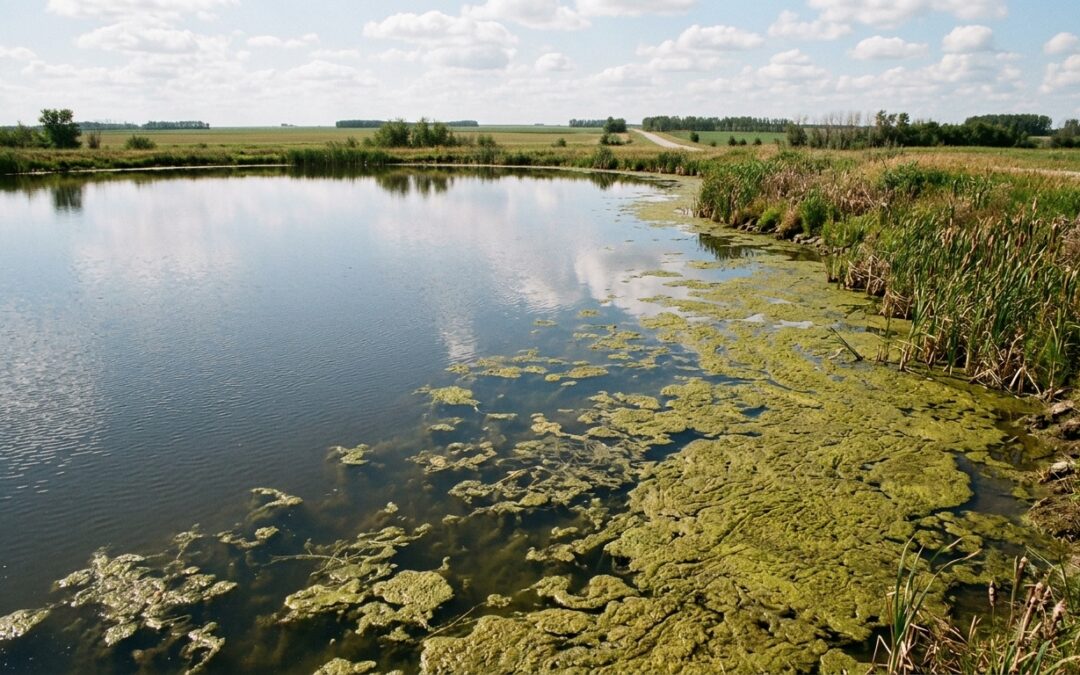
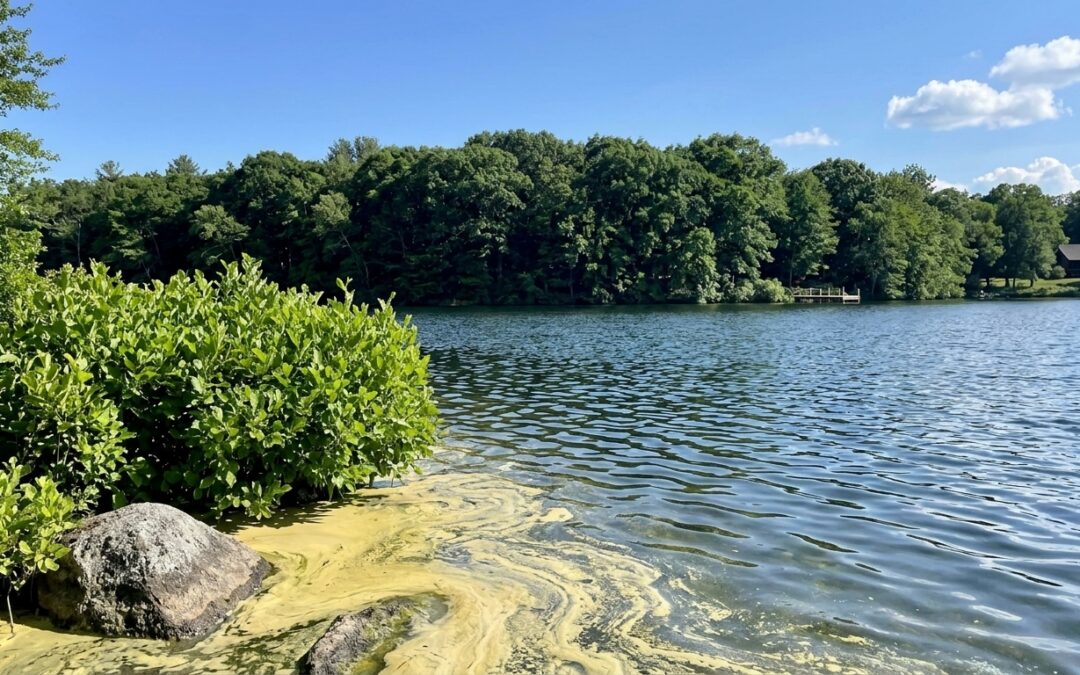
A pond that looks fine in spring can be compromised by July. The early indicators are subtle — a slight color shift, a faint odor, a thin film at the edge. By the time the algae is visible, the underlying chemistry has already shifted significantly.
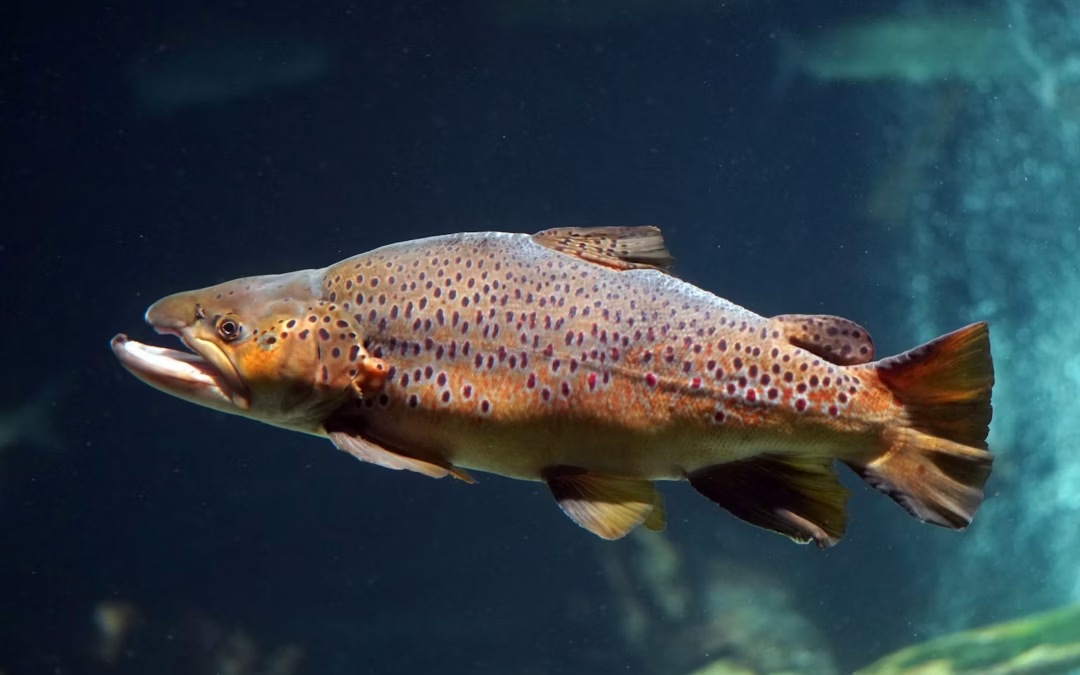
Not all invasive species carry the same ecological weight. Some alter water chemistry, others displace native fish, and some transform the physical structure of entire wetland systems. Below are four of the most consequential species currently threatening Manitoba water bodies.
A pond that goes into pollen peak with strong bacterial populations, good oxygen levels, and a clear baseline has an excellent chance of coming through the spring window with water clarity intact. A pond that waits for the problem to be visible before acting will spend the entire summer playing catch-up.
What's Sitting at the Bottom of Your Pond Right Now? CWP Sludge & Muck Reduction...
Every season, we receive messages like this: “The algae keeps coming back. The water turns green....
Clean Water Pro and founder Lynne Melvin were mentioned in an article published by Water Today New...
If you’ve lived in Manitoba for any amount of time, you’ve probably seen wetlands without even...
Executive Summary This white paper provides a technical analysis of the occurrence, causes, and...
As pond owners, we often focus on what we can see — algae, water clarity, shoreline plants, or...