
Fighting Invasive Species in Manitoba Waters
Manitoba's lakes, rivers, and wetlands are some of the most ecologically rich on the continent. But beneath their surface — and quietly spreading along their shorelines — a silent invasion is reshaping the way these waters look, smell, and function. Invasive species are no longer a distant threat. They are here, they are spreading, and the window to act is narrow.
Every summer, boaters pull into a new lake, anglers wade into a new stretch of river, and waterfowl land on remote ponds. In each case, there is an invisible passenger risk: fragments of aquatic plants clinging to a propeller, mussel larvae suspended in bilge water, seeds tucked into waders. These are the vectors of biological invasion — and in Manitoba's interconnected water systems, the consequences can be irreversible.
At Clean Water Pro, we work across commercial, municipal, and agricultural water bodies throughout Manitoba. We see the results of early detection — and the devastating cost of late response. This post is for lake managers, landowners, municipal planners, and anyone responsible for the stewardship of a Manitoba water body. Here is what you need to know.
🌊 The Scale of the Problem in Manitoba
The Species You Need to Know
Not all invasive species carry the same ecological weight. Some alter water chemistry, others displace native fish, and some transform the physical structure of entire wetland systems. Below are four of the most consequential species currently threatening Manitoba water bodies.
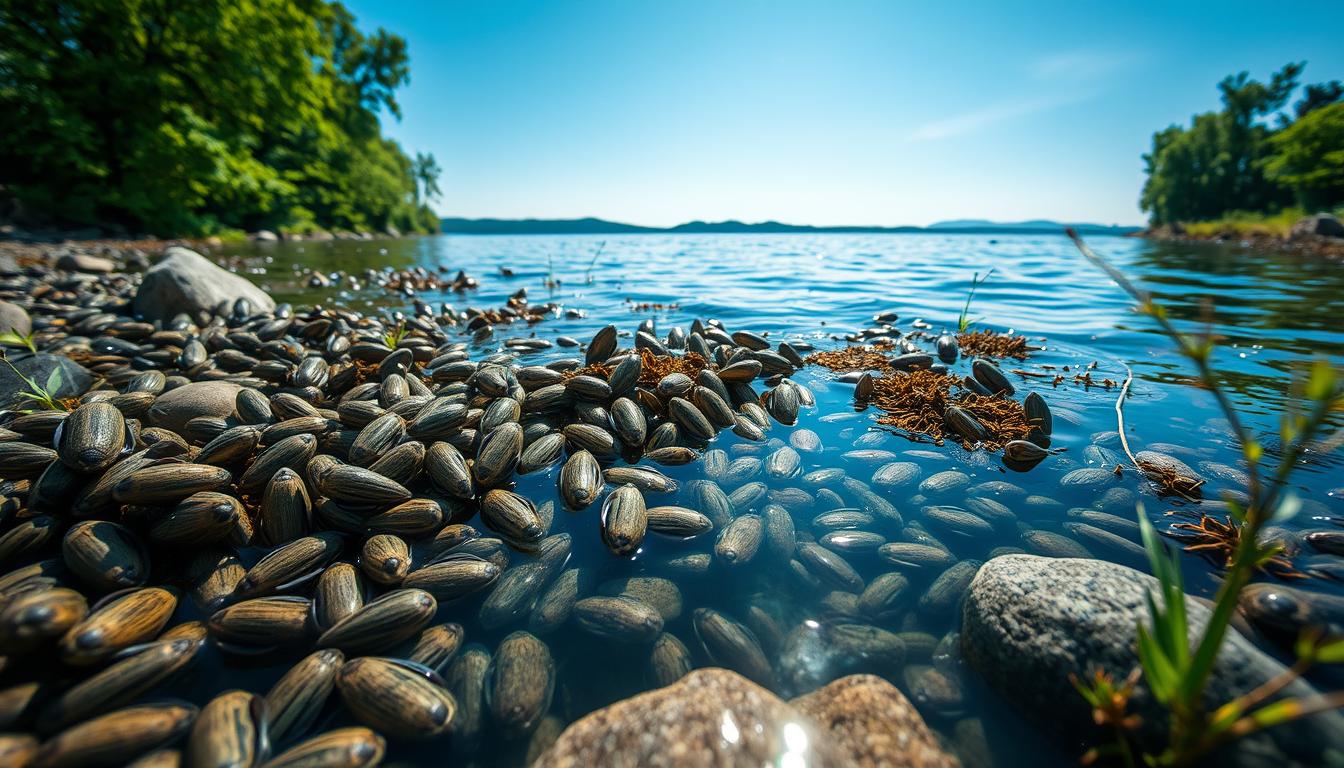
Zebra Mussel
Dreissena polymorpha
First detected in Lake Winnipeg in 2013, zebra mussels filter enormous volumes of water, stripping out the microscopic algae that native species depend on. They colonize intake pipes, boat hulls, and native mussel beds — often wiping them out entirely. A single female can produce up to one million eggs per season.
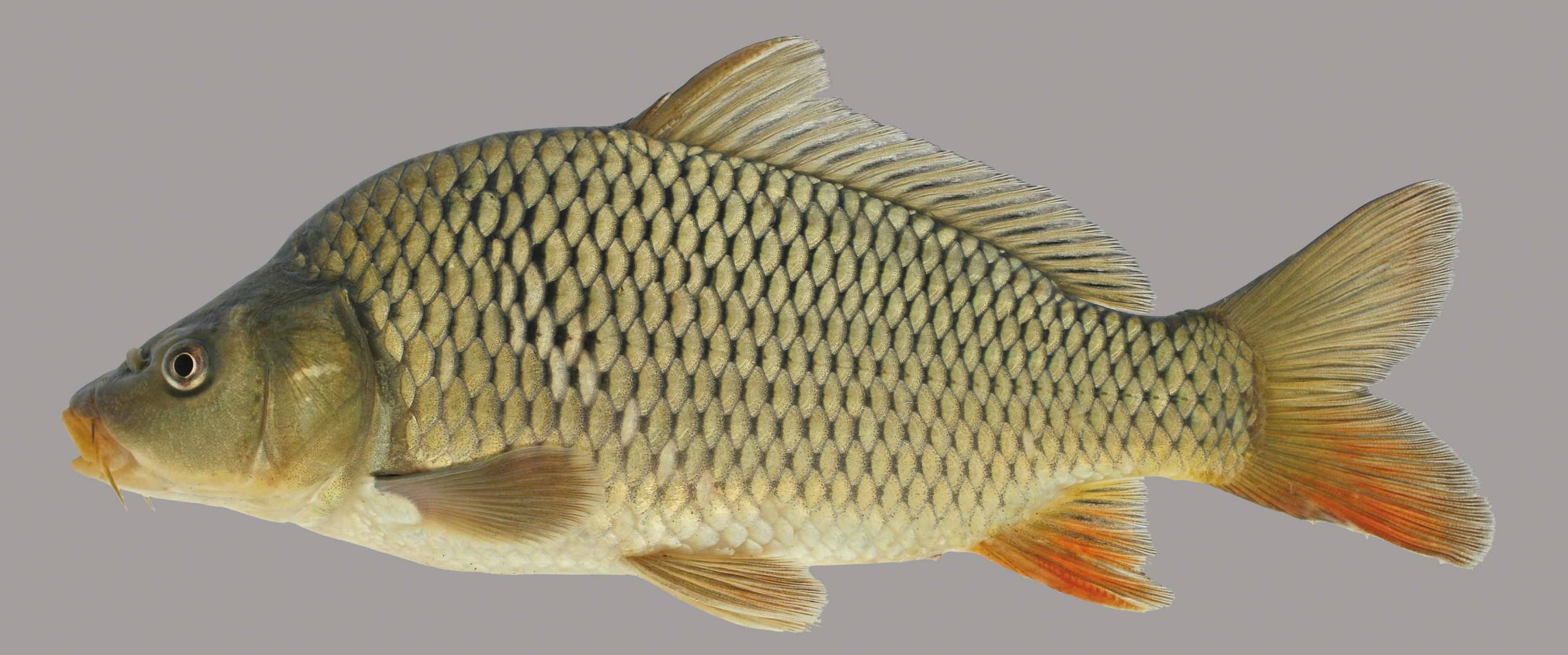
Common Carp
Cyprinus carpio
One of Manitoba's longest-established aquatic invaders, common carp uproot native aquatic plants while foraging, dramatically increasing water turbidity and nutrient loading. Their rooting behaviour releases phosphorus from sediments, fueling algal blooms. In heavily infested lakes, water clarity can drop from metres to centimetres.
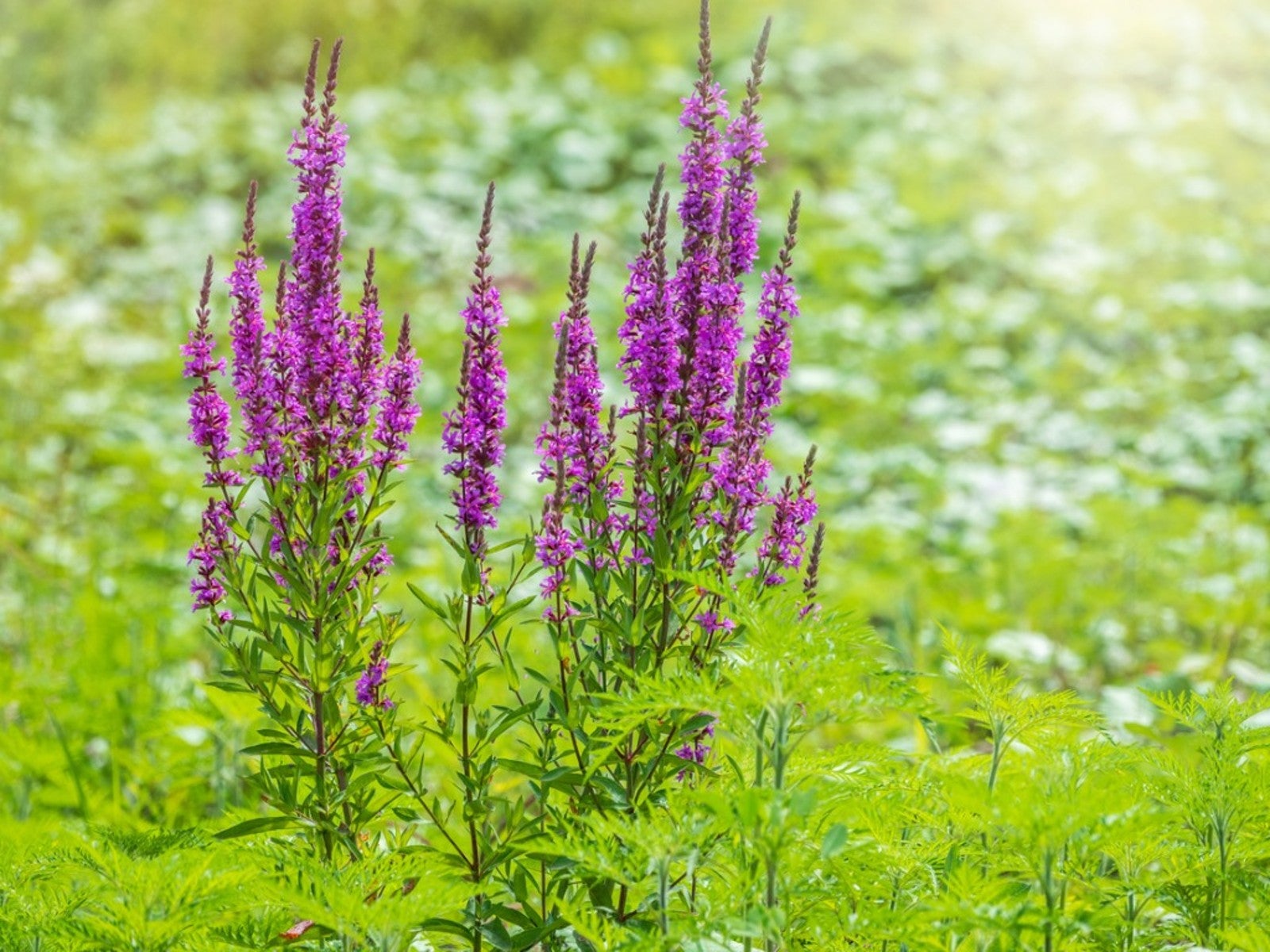
Purple Loosestrife
Lythrum salicaria
Beautiful to look at, devastating to wetlands. Purple loosestrife crowds out native cattails and sedges, eliminating the nesting and feeding habitat that waterfowl, muskrats, and marsh birds rely on. A single plant produces up to 2.7 million seeds annually — and those seeds remain viable in soil for years.
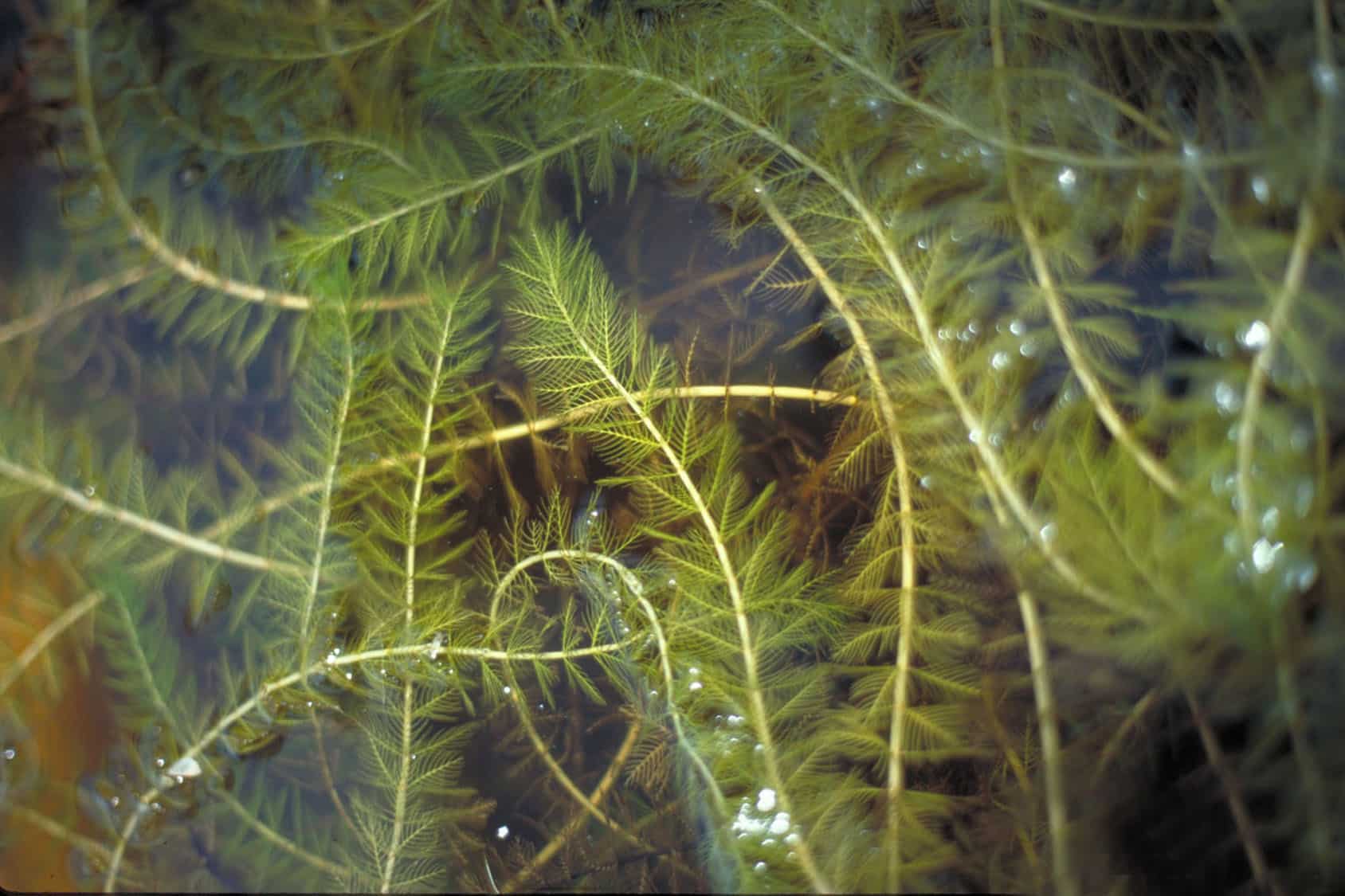
Eurasian Watermilfoil
Myriophyllum spicatum
This submerged aquatic plant grows rapidly in nutrient-enriched waters, forming dense canopies that block sunlight for native plants and create stagnant, low-oxygen zones near the bottom. It spreads via tiny plant fragments, meaning every boat that moves between water bodies can carry new infestations on its hull or propeller.
🔁 How Invasives Spread — The Pathway Chain
Introduction
Boats, bait, ornamental plants, and foot traffic carry species between water bodies
Establishment
A small founding population takes hold where native competition is weak or habitat is disturbed
Spread
Rapid reproduction outpaces native species; fragments, seeds, or larvae disperse via currents and wildlife
Impact
Native biodiversity collapses, water quality degrades, and economic costs mount
What an Invasion Actually Looks Like — and Why It Gets Missed
The early stages of aquatic invasion are nearly invisible. A handful of zebra mussel veligers in the water column are too small to see with the naked eye. A new stand of purple loosestrife at the edge of a retention pond looks, to the untrained eye, like a field of wildflowers. A slightly cloudy dugout in late summer might look like algae, when in fact it reflects the sediment disturbance of carp rooting at the bottom.

By the time an invasion becomes visually obvious — the weed mat that blankets a cove, the algal bloom that shuts down a beach, the dramatic decline in fish catch — the population has typically been established for years. Management at this stage is exponentially more costly and difficult than early intervention would have been.
This is why surveillance is not optional. It is the foundation of every effective invasive species management program.
We have never once responded to an invasive species call and wished we had waited longer. Early detection is the only point in this chain where cost-effective control is still possible.
— Clean Water Pro Field Team, ManitobaWhat Effective Management Actually Involves
There is no single tool that solves an invasive species problem. The most successful programs integrate surveillance, treatment, and long-term monitoring — and they begin before an invasion takes hold rather than after.
Invasive Species Assessment
Before any treatment can be designed, you need to know what you are dealing with. Clean Water Pro's Invasive Species Assessment service establishes a current-state baseline for your water body — identifying which species are present, their abundance and distribution, and the ecological conditions that are making your site vulnerable. This assessment feeds directly into a management plan with clear, measurable outcomes.
Water Quality Monitoring
Invasive species rarely arrive in isolation. They exploit ecological weaknesses — elevated nutrients, reduced oxygen, disturbed shorelines — that pre-exist in your water body. Our Water Quality Testing and Monitoring program tracks the parameters that signal risk: phosphorus and nitrogen loads, dissolved oxygen profiles, turbidity, pH, and conductivity. When these indicators shift, we know where to look.
Vegetation Inventory Assessment
For aquatic and emergent invasive plants, the first step is knowing exactly what is growing where. Our Vegetation Inventory Assessment maps native and invasive species across your entire water body, documents the proportion of native vs. invasive cover, and identifies the priority treatment zones. Without this map, treatment efforts are reactive and inefficient.
Biological and Mechanical Treatment
Once a management plan is in place, treatment options depend on the species, the scale of invasion, and the ecological context of the water body. For aquatic plants, mechanical removal and targeted biological approaches offer lower ecological risk than broad-spectrum herbicides in sensitive systems. For invasive fish populations, management may involve structural interventions that prevent movement between water bodies or targeted removal programs coordinated with provincial authorities.
Management Approach |
Best Suited For |
Effectiveness |
Notes |
|---|---|---|---|
Invasive Species Assessment |
All water bodies — starting point |
Establishes baseline; required before any treatment |
|
Water Quality Monitoring |
Ongoing surveillance program |
Detects vulnerability windows before invasion occurs |
|
Vegetation Inventory |
Aquatic and emergent plant invasives |
Maps priority treatment zones for efficient response |
|
Aeration / DO Management |
Carp pressure, algae-linked invaders |
Reduces ecological vulnerability; not a primary removal tool |
|
Biological Remediation |
Nutrient loading that favors invasives |
Works best when combined with physical removal |
Prevention: The Work That Doesn't Make Headlines
The least visible aspect of invasive species management is also the most valuable. Clean, Drain, Dry — the provincial protocol for watercraft — prevents the vast majority of introductions when followed consistently. But human behaviour is difficult to change without education, infrastructure, and enforcement that supports it.
For commercial and municipal clients managing public water access, this means investing in inspection stations, signage, and staff training. It means designating check points, providing water removal infrastructure, and building decontamination capacity at boat launches. These are not glamorous expenditures. They are, however, dramatically cheaper than managing an established invasion.
🛥️ Manitoba's Clean, Drain, Dry Protocol
Every boater, angler, and water recreationist entering Manitoba's lakes and rivers is required to:
- Clean all aquatic plants, animals, and mud from watercraft, equipment, and footwear before leaving any water body
- Drain all water from the boat, motor, bilge, live wells, and bait containers
- Dry all equipment for at least five days before entering a new water body — or decontaminate using high-pressure hot water
Watercraft inspectors operate at provincial check stations throughout peak season. Failing to comply can result in significant fines under the Aquatic Invasive Species Order.
⚠ What You Should Never Do
Do not release bait fish, aquarium fish, or live bait into any Manitoba water body — ever. Do not dump aquarium plants. Do not transport live fish between water bodies. Each of these actions has directly introduced invasive species into previously clean Manitoba lakes. The harm is irreversible, and the penalties are real.
The Broader Picture: Why This Matters Beyond Your Water Body
Manitoba's watersheds are connected. Water that flows through a private dugout reaches a creek. That creek reaches the Assiniboine. The Assiniboine reaches the Red. The Red flows into Lake Winnipeg, one of the world's largest freshwater lakes — and one of the most phosphorus-loaded on Earth. Every water body in Manitoba is a node in a larger network, and what happens in one eventually affects the others.
This is not abstract. Zebra mussels confirmed in Lake Winnipeg have the potential to spread through the entire river system into connected lakes. Eurasian watermilfoil in one recreational lake can be in the next one within a single summer. Purple loosestrife seeds travel on floodwater, on wildlife, and on vehicle undercarriages.
The investment in early detection and prevention is not just about protecting one water body. It is about protecting the system that every Manitoba community — agricultural, municipal, recreational, and Indigenous — depends on for water security.

Where Clean Water Pro Fits In
Clean Water Pro provides science-based assessment and management services for commercial, municipal, and agricultural water bodies across Manitoba. Our team holds expertise in wetland ecology, water quality science, and aquatic habitat assessment — and we operate under the same stewardship principles that guide the province's own conservation programs.
We don't sell silver bullets. We do provide accurate, defensible assessments; detailed management plans grounded in current science; and ongoing monitoring programs that detect problems before they become crises. If you manage a water body in Manitoba — a retention pond, a dugout, a fishery lake, a recreational beach, or a wastewater lagoon — an invasive species vulnerability assessment belongs in your 2026 management plan.
Is Your Water Body at Risk?
Our team can assess your site for invasive species vulnerability and develop a management plan tailored to your water body, your timeline, and your budget.