
By mid-November, most small ponds and dugouts across southern Manitoba are skimming over or already sealed. The surface looks calm and finished for the year. Underneath, the pond is about to face its toughest test: four to five months with no fresh oxygen coming in.
That is why we get one question every fall from farm owners near Portage la Prairie, stormwater pond managers in Winnipeg and Brandon, and backyard pond owners around Carman: does my pond actually need aeration in winter? The honest answer is “it depends,” and this guide shows you what it depends on, so you can decide before the ice makes the choice for you.
The Problem: Ice Turns Your Pond Into a Sealed Container
Through summer, wind and waves push oxygen into the water and algae and plants add more during the day. Once ice forms, both sources shut down. Snow on top blocks sunlight, so oxygen-producing plants and algae fade. Meanwhile, bacteria keep breaking down every leaf, dead algal cell and layer of muck on the bottom, and they use up oxygen as they do it. We explained the first half of this story in What Happens to Your Pond When the Temperature Drops?

When the oxygen runs short, fish can suffer winterkill, and gases from decomposition such as hydrogen sulfide and methane build up under the ice. The sign most owners notice is the rotten-egg smell and dark, cloudy water when the ice goes out in April. Low oxygen at the bottom also releases phosphorus from the sediment, which can feed an early algae bloom in spring, a pattern covered in High Phosphorus in Your Dugout.
Does Your Pond Actually Need Winter Aeration?
Not every pond does. A deep, clean pond with little muck and few inputs often holds enough oxygen to get through the winter on its own. Trouble tends to show up when a pond has a high oxygen demand and a small oxygen reserve. Here is a simple way to place yours:
Likely fine
Deep water, a thin muck layer, few trees nearby, no fish to protect, and no winterkill or spring odour in past years.Worth considering
A shallow or mid-depth dugout, a growing muck layer, poplar, ash or maple leaf drop, or livestock and field runoff feeding the water.Strongly consider
Fish you want to keep, a stormwater retention pond, a past winterkill, or a strong sulfur smell at ice-out.What to Weigh Before the Freeze
Depth and size. Shallow water has less oxygen to begin with, and a pond that freezes close to the bottom leaves little room for fish. Many Manitoba dugouts and subdivision ponds fall into this group, so they are the ones we see struggling most often.
How much muck you carry in. Every leaf and every inch of organic sediment is future oxygen demand. If you read our post on fallen leaves and muck and recognized your pond, winter is when that debt comes due. A quick look at the water before freeze-up, such as dissolved oxygen monitoring, tells you far more than guessing.
Fish and water use. Trout, bass and other stocked fish need oxygen all winter. For livestock producers, a foul or oxygen-starved dugout in spring means poorer water just as the herd turns out to pasture. Our dugout solutions, stormwater pond solutions and fishery lake solutions each handle this differently.
Power and site access. Winter aeration works best with a reliable power source and a shore-side cabinet you can reach in a snowstorm. If your pond is far from the yard, plan the airline route and power before the ground freezes.

The Solution: Get Oxygen Moving Before the Ice Locks In
Bottom-diffused aeration pushes fine bubbles up from the deepest water. The bubbles bring oxygen in, keep water circulating and let trapped gases escape at the surface. Fine-bubble systems are efficient, and we explain why in the technology behind fine-bubble aeration. System size and diffuser placement matter in winter, especially in ponds with fish, so we recommend a quick assessment before you buy. Also confirm cold-weather operation in the manufacturer’s manual and keep airlines free of kinks and ice.

These two Airmax systems cover most Manitoba ponds and dugouts:
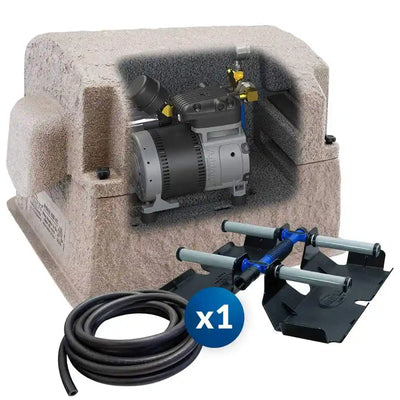
Airmax PS10 Pond Aerator
A complete aeration system for ponds up to 1 acre, a good fit for farm ponds, small dugouts and large backyard ponds.
View the PS10
Airmax PS20 Pond Aerator
Built for ponds up to 2 acres and 50 feet deep, for larger dugouts, stormwater ponds and fishery lakes.
View the PS20Already own an Airmax system? Check your diffusers and air filters now. ProAir weighted diffusers and the rest of the water aeration range include replacement parts and maintenance kits, which are far easier to swap in November than in a January cold snap.
Reduce the Load: Clean Up and Treat While the Water Is Open
Aeration works best when it has less to fight. Lift leaves out before they sink, using rakes, skimmers and nets from our pond and lake tools, and cover small ponds with pond netting next fall to catch leaves before they sink. Then address the muck already on the bottom. CWP Muck Remover Plus uses beneficial bacteria to break down organic sediment, and the CWP Pond Balance Bundle helps keep the pond balanced over the season. Bacteria slow in cold water, so check each label for its temperature range and plan the bigger treatment push for after ice-out. You can browse everything in the pond treatments collection.
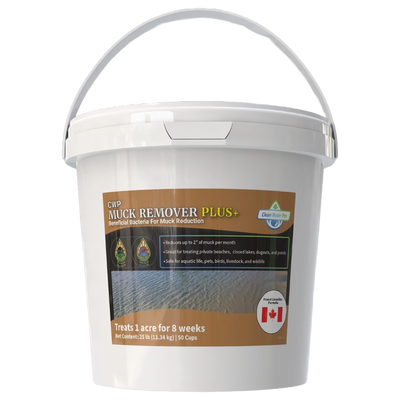
CWP Muck Remover Plus
Beneficial bacteria that reduce organic muck in ponds and dugouts, so there is less to use up oxygen under the ice.
View the treatmentYour Manitoba Freeze-Up Timeline

Winter Pond Aeration in Manitoba: Common Questions
Do I need to aerate my pond in winter in Manitoba?
Not always. Deep, clean ponds often hold enough oxygen on their own. Shallow dugouts, stormwater ponds, ponds with heavy muck, and ponds with fish are the most likely to benefit.
When should I install a pond aerator before freeze-up?
While the water is still open. Across southern Manitoba, ponds usually skim over from late October into mid-November, so earlier is better.
Is an aerated pond safe to walk on?
No. Aeration creates thin or open ice near the diffuser. Mark the area and keep people, pets and livestock away.
Can I aerate a dugout used for livestock water?
Yes, aeration is commonly used on dugouts to support oxygen and water quality. Have the dugout assessed first so the system is sized and placed correctly.
Not sure if your pond is ready for ice?
Clean Water Pro can check oxygen levels, water quality and muck depth, then recommend whether aeration makes sense for your farm dugout, stormwater pond or backyard pond anywhere in Manitoba.
Book a free pond consultation Shop Pond Supply