
November 2026 · FREEZE-UP PREP
What Happens to Your Pond When the Temperature Drops?

November in Manitoba has a familiar feel. The geese are mostly gone, mornings are sharp, and the first skim of ice is not far off on the smaller ponds and dugouts. For a lot of owners this is also when the pond slips out of mind. It looks quiet, so it must be resting.
It is not resting. A pond heading into winter is changing faster than at almost any other time of year, and what happens over the next few weeks decides whether you get a clean ice-out in April or an unpleasant surprise. Here is what cooling water really does, why ice cover is the true turning point, and what you can still do before the lid goes on.
Step One: The Water Cools and Mixes
Through summer, a deeper pond sits in layers, with warmer water on top and colder, denser water below. As autumn nights cool the surface, that top layer gets heavier and starts to sink. Wind helps push it along. Water is at its densest at about 4°C, so once the whole pond approaches that temperature the layers stop resisting, and the pond turns over from top to bottom. We covered how this plays out for fish in our post on why trout die in peak summer heat.
Turnover is a normal and often healthy event. The trouble starts when the bottom water has been low in oxygen and loaded with nutrients and decaying material all summer. Mixing spreads all of that through the entire pond within days, which is why cloudy water, odour and stressed fish sometimes appear in October on ponds that looked fine in August.

Step Two: Ice Seals the Pond and the Oxygen Clock Starts
Once ice forms, the pond is closed for the season. Wind can no longer mix the water, and air can no longer refill the oxygen. Under the ice the layers flip, with the coldest water near 0°C sitting just below the surface and the slightly warmer, densest water near 4°C resting on the bottom. Snow on top of the ice blocks sunlight, so the algae and plants that make oxygen during the day slow down or die back.
Meanwhile the bacteria keep working. Decomposition slows in cold water but never stops, and every leaf, dead algal cell and scoop of muck on the bottom uses oxygen as it breaks down. Cold water holds more oxygen, but the supply is fixed once the surface is sealed. Gases from decomposition, including methane and hydrogen sulfide, get trapped as well.

What Is Already Sitting in the Pond Going Into Winter
Think about everything a pond has collected since May. Summer algae sinks as it dies. Aquatic plants collapse in September. Poplar, maple and ash leaves are dropping now, and the bottom may already hold years of organic buildup, as we described in What's Sitting at the Bottom of Your Pond Right Now? Every bit of that material is a future oxygen demand, and our look at fallen leaves and muck shows how quickly it adds up.
This applies across the province. Farm dugouts in the Interlake and around Portage la Prairie collect field runoff and livestock inputs. Stormwater ponds in Winnipeg, Brandon and Steinbach subdivisions collect lawn clippings, fertilizer and street runoff. Backyard ponds near Carman and across southern Manitoba sit under the same trees that are dropping leaves right now. The more a pond carries into winter, the faster it uses up its oxygen.
Goes in prepared
Leaves removed, a thin muck layer, aeration running and oxygen checked. Ice-out is usually uneventful, with little odour and healthy fish.Goes in loaded
Heavy leaf drop, a thick muck layer, and no aeration or an undersized system. Oxygen runs short under the ice and ice-out brings odour, fish stress and a big algae push.Signs Your Pond Struggled Under the Ice
If you have seen any of these at ice-out in past years, the pond was telling you something about the winter before.
What you notice at ice-out | What it usually points to |
|---|---|
Rotten-egg or swampy smell as the ice melts | Gases from decomposition trapped under the ice, often with low oxygen |
Dead fish along the shoreline | Oxygen dropped too low during the winter |
Dark, cloudy water after the thaw | Muck and nutrients stirred up as the pond mixes again |
Early and heavy spring algae | Nutrients released from sediment, a pattern we explain in High Phosphorus in Your Dugout |
None of this is bad luck. It traces back to what the pond carried into winter, which is why the next few weeks matter so much.
What to Do Before the Ice Arrives
Small ponds and dugouts in Manitoba typically start to skim over in late October or early November, and most are under ice by mid-November, though size, depth and the weather all change that. The window for open-water work is short, so here is a simple order of operations.
1. Get oxygen working before ice-on
Aeration is the most useful tool for a pond that faces a heavy oxygen demand, because it keeps water moving and oxygen entering while the surface is closed. Our overview of fine-bubble aeration technology explains why we favour it. Larger ponds and dugouts can browse the full water aeration range, and check your manual for cold-weather operation and make sure airlines are free of kinks and ice before freeze-up.
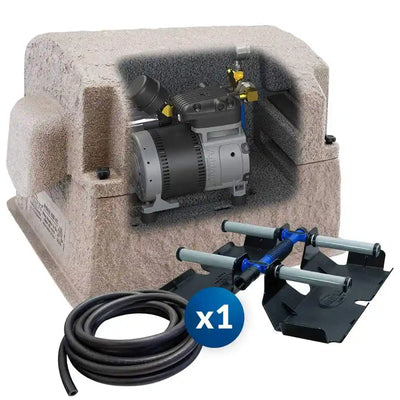
Fine-bubble aeration for ponds up to 1 acre. Keeps oxygen moving into the deeper water where decomposition is heaviest.
View aerator
2. Clear leaves and debris now
Every leaf you lift out in November is oxygen demand you do not have to cover in January. Skimmers, rakes and netting from our pond and lake tools collection make this quick, and it is the easiest win on the list.
3. Find out what the water is actually doing
Guessing is how ponds get the wrong treatment. Readings at different depths show whether the bottom is already running low, and chemistry shows how much nutrient load is waiting in the sediment. See our dissolved oxygen monitoring and water quality testing and monitoring, which work the same way on dugout ponds, stormwater retention ponds and fishery lakes.
4. Treat the muck while the pond is still open
Beneficial bacteria help break down the organic layer, and they work best when oxygen is present, so this pairs naturally with aeration. Biological activity slows as water cools, so check the product label for its temperature range and plan the bigger push for after ice-out. The pond treatments collection and the CWP Pond Balance Bundle are good places to start.
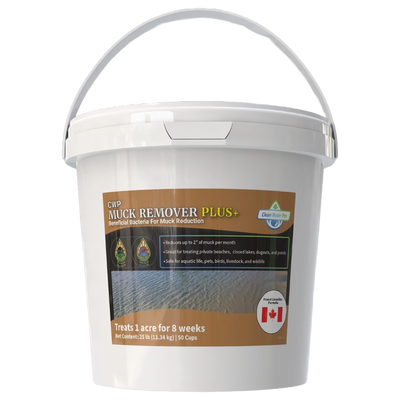
A beneficial-bacteria treatment made for ongoing reduction of organic sediment in ponds and dugouts.
View treatmentNot sure if your pond is ready for ice?
Whether you manage a farm dugout, a stormwater pond in Winnipeg or Brandon, or a backyard water garden near Carman, the best next step is to find out what your pond is carrying before it freezes. Clean Water Pro can assess your oxygen levels, water quality and muck depth, and build a plan that fits your pond before the ice arrives.
Book a free pond consultation Shop Pond Supply