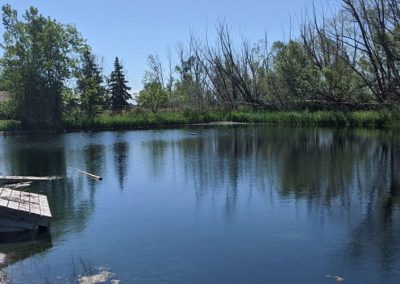
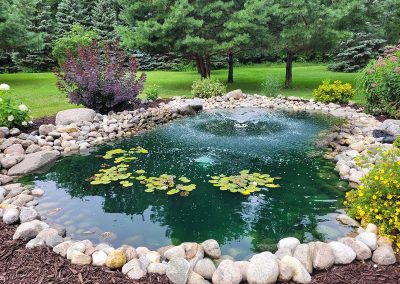
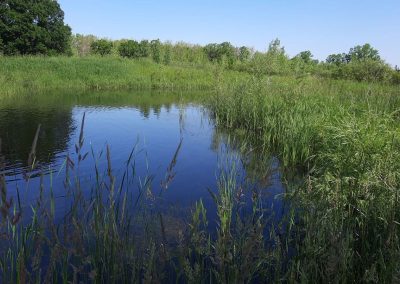
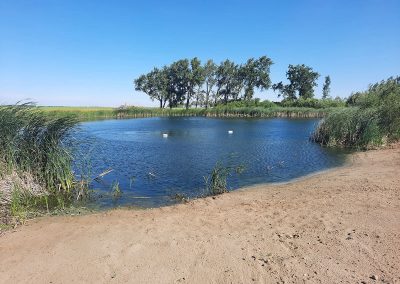
Every pond is unique and requires its own plan for you to get in sync with it. We’ve managed both residential and commercial dugout projects. The main objective that many of our clients seek is to transform their existing (and often unsightly) dugout from an eyesore to an eye-opening feature that can be used for recreational purposes like swimming, wading, or paddling.
We offer on-site consultations where our water experts assess your pond, and with the data collected, we can provide you with a management program that you can implement yourself or hire us to do it for you. If you follow our recommended plan and treat the pond yourself, we will continue communicating with you to guide you through the process, ensuring a positive outcome. Give us a call to arrange your consultation and determine what’s occurring at the microscopic level.
Are you planning to stock your pond with fish? We conduct fish habitat assessments to determine what fish species can best thrive based on their structure and food source. Each species of fish has specific requirements not only to survive but also to grow and reproduce. Get in touch to learn what fish species will best suit your pond!
Past Residential Projects

Residential Testimonials
Residential Blogs
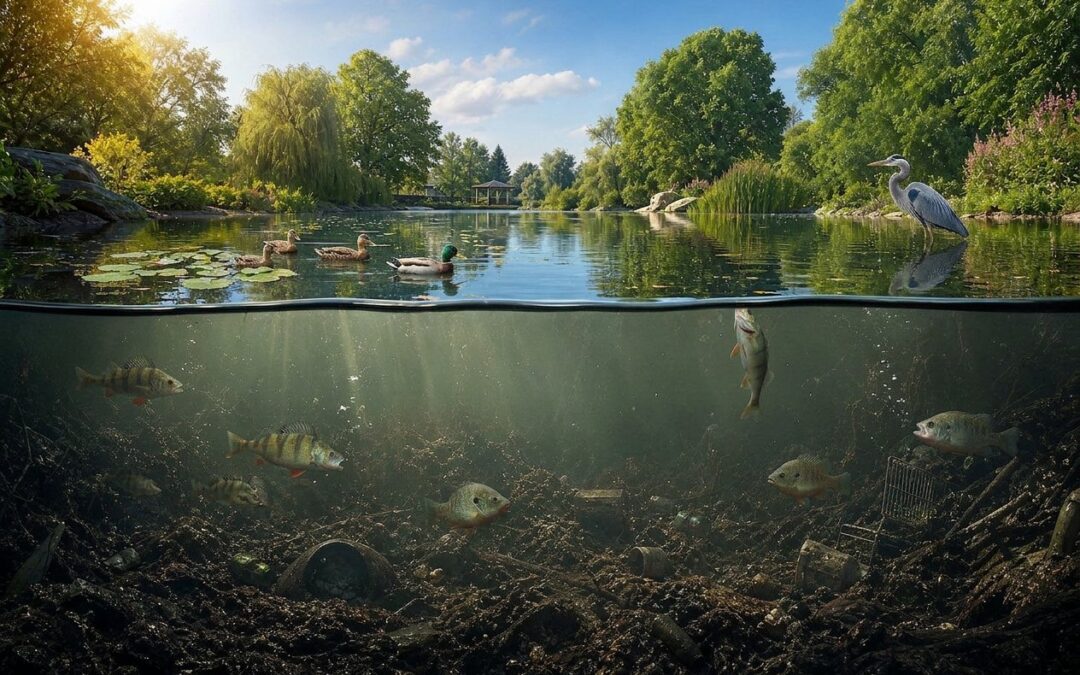
The Hidden Danger Beneath the Surface: Safety Hazards of Heavy Muck Accumulation in Ponds
Pond muck is not just an aesthetic problem. It’s a layered hazard — physical, chemical, biological, and structural — that builds invisibly and worsens reliably unless actively managed. The safety risks it creates for people, pets, and wildlife are real and well-documented, and the long-term damage it inflicts on pond function is significant and expensive to reverse.
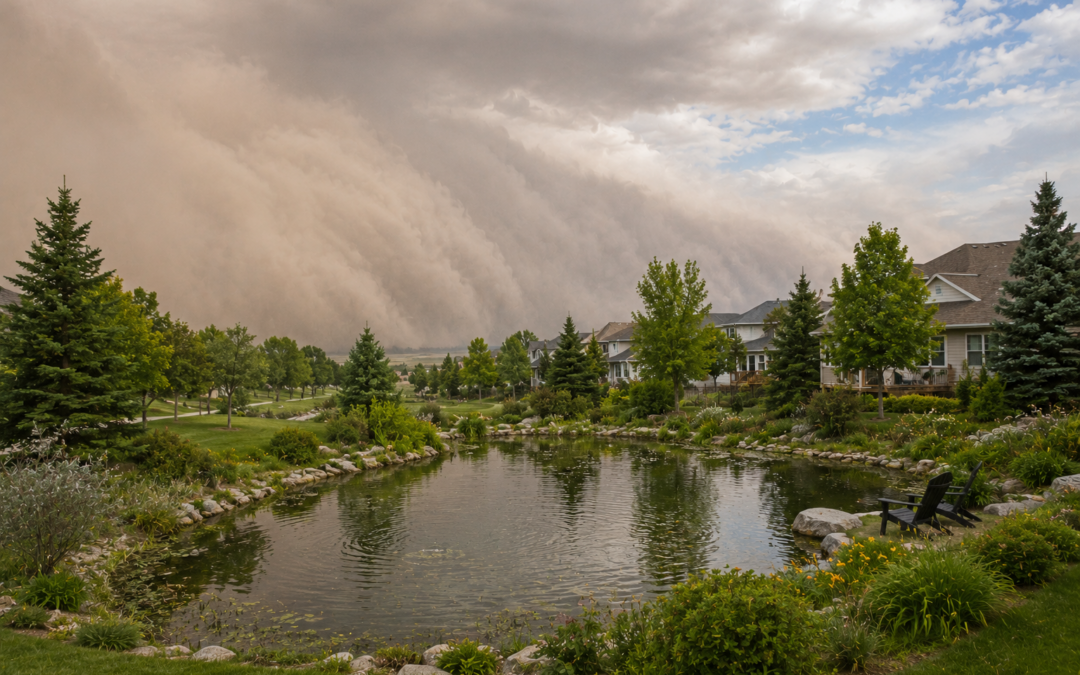
When the Prairie Blows: Dust Storm Aftermath and What It Means for Your Pond
A powerful prairie dust storm can leave more than just a dramatic sky—it impacts your pond’s health. Learn how airborne sediment, nutrients, and organic debris affect water quality and what steps to take after the storm.
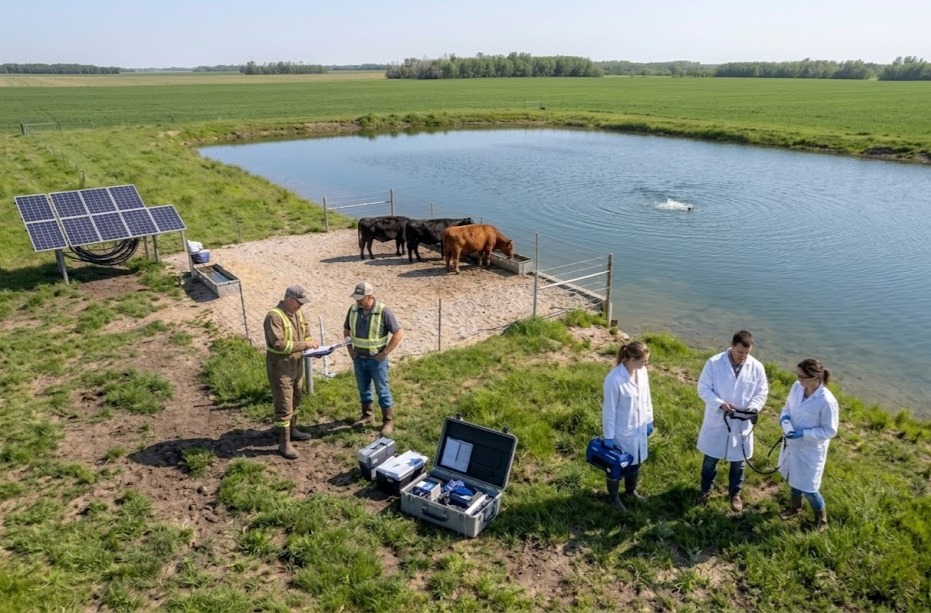
Your Farm Pond Is Telling You Something. Are You Listening?
A pond that looks fine in spring can be compromised by July. The early indicators are subtle — a slight color shift, a faint odor, a thin film at the edge. By the time the algae is visible, the underlying chemistry has already shifted significantly.