OCTOBER 2026 · FALL POND CARE
Your Pond Looks Fine, But Is It Ready for Fall?

Your Pond Can Look Fine on the Surface
Walk down to almost any pond in early October and you will see what looks like a success story. The summer algae has faded, the water has cooled, and the surface looks calm. For many owners of backyard ponds, farm dugouts and stormwater retention ponds from Vancouver to Halifax, that is the moment the pond gets ignored until spring.
The trouble is that clear-looking water is not the same as healthy water. Dissolved oxygen, nutrient levels and the layer of organic material on the bottom cannot be judged from the shoreline. Cooler water often looks cleaner simply because algae slows down in the cold, while the causes underneath are still sitting there.
What you see
Clear-ish water, fewer algae mats, no smell at the edge, a calm surface.What may be underneath
A settled layer of dead algae and plant matter, nutrients ready to release, and oxygen that drops quickly once ice arrives.What Summer May Have Left Behind
A hot summer is hard on a pond. Long, hot days and strong sun push nutrient levels and algae growth. When the blooms die off in late summer, they do not disappear. They sink. Our own look at why pond algae explodes in July explains how phosphorus recycled from bottom sediment keeps feeding that cycle.

By the end of summer, most ponds are carrying some mix of excess nutrients (especially phosphorus), spent algae, plant die-back, and fine sediment washed in by runoff. Together these form the soft, dark layer many owners call muck, and it is the same buildup we described in What's Sitting at the Bottom of Your Pond Right Now? Low-oxygen pockets often form near that layer, and you cannot see them from above.
Fall Changes What Happens Below the Surface
October brings falling temperatures, shorter days, and a fresh load of leaves and dead vegetation. Poplar, maple and ash leaves settle on the water, sink, and start to decompose on top of everything summer already left behind. Bacteria break this material down, and that work uses oxygen. Colder water actually holds more oxygen, but the demand from decomposition keeps rising, and once ice covers the pond, the supply from the air is cut off for months.
For a farm dugout that supplies livestock water, or a stormwater pond near a subdivision anywhere in the country, that winter oxygen squeeze can mean odour at ice-out, fish stress, and a bigger algae push the next summer. Our earlier post on fallen leaves and muck covers the leaf side of this in more depth.
Early October Is Still a Good Time to Assess
In much of Canada the window for pond work is short, and freeze-up usually arrives by late fall. That makes the next few weeks the last comfortable chance to find out what your pond is actually dealing with. An assessment does not have to be complicated. It comes down to a handful of checks:
Water quality
Phosphorus, nitrogen, pH and clarity tell you how much nutrient load the pond carries. See our water quality testing and monitoring.Dissolved oxygen
Readings at different depths show whether the bottom is running low. Learn about dissolved oxygen monitoring.Muck depth
A soft, dark, odorous bottom layer is a sign of years of buildup, not just this season's.Aeration
Is your system running, sized for the pond, and ready to keep working into freeze-up?Shoreline runoff
Bare banks, fertilized lawns or feedlot drainage feed nutrients straight in.Algae and plants
Note what is dying back and where it is piling up. A lake vegetation and algae assessment can map it.Don't Treat the Symptom Before Finding the Cause
It is tempting to grab a treatment the moment something looks off: algae on the edge, a bit of odour, cloudy water after rain. But the same symptom can come from very different causes. Green water might come from phosphorus in the sediment, or from runoff, or from low oxygen that is stopping bacteria from doing their job. Treat the wrong one and you spend money without fixing anything.

What Does Your Pond Need Before Winter?
Once you know the cause, the fix usually falls into one of a few groups. Here is how the common findings match up with a response, and where to find the right products.
What the assessment finds | Likely need | Where to start |
|---|---|---|
Low oxygen at depth | Aeration that runs through freeze-up | |
Thick, dark bottom layer | Sludge and muck reduction | |
High phosphorus | Nutrient management | |
Recurring algae and weeds | A combined biological program | |
Unclear cause | Testing and a site assessment |
Aeration: the foundation
Oxygen is what allows every other treatment to work. A properly sized aeration system keeps the water column mixed and supports the bacteria that break down organic matter. Our overview of fine-bubble aeration technology explains why we favour it, and for pond owners who are ready to shop, the Airmax PS10 is sized for ponds up to one acre.
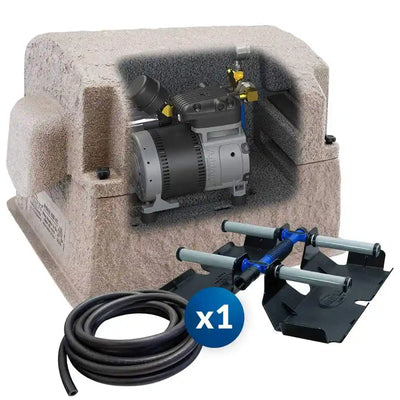
Fine-bubble aeration for ponds up to 1 acre. Keeps oxygen moving into the deeper water where decomposition is heaviest.
View aeratorMuck and sludge reduction
If the assessment shows a heavy organic layer, biological treatment works alongside oxygen to break it down over time. It will not happen overnight, and it works best when aeration is already in place.
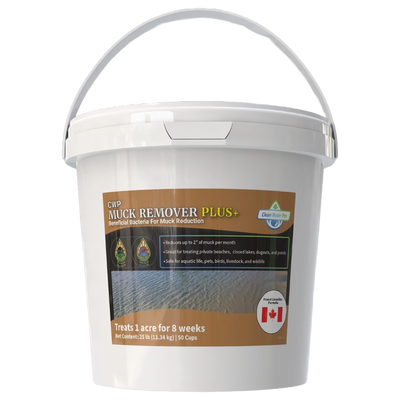
A beneficial-bacteria treatment made for ongoing reduction of organic sediment in ponds and dugouts.
View treatmentNutrient management
When phosphorus is the driver, the goal is to lock it up so it cannot fuel next summer's bloom. This matters especially for livestock dugouts, as we explain in High Phosphorus in Your Dugout.
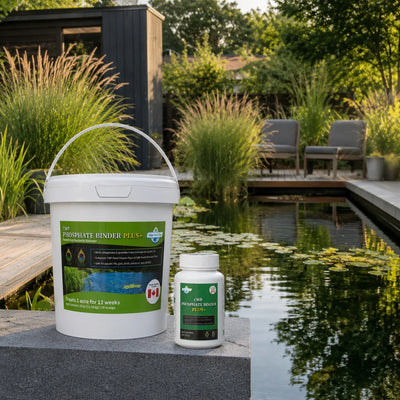
An all-natural phosphate binder with a beneficial bacteria booster to help starve algae of its fuel.
View binderYou can also browse the full pond treatments collection or our pond and lake tools for netting and skimmers that keep this fall's leaves out of the water.
Not sure what your pond needs?
Whether you manage a farm dugout, a stormwater pond, or a backyard water garden anywhere from Vancouver to Halifax, the best next step is to find the cause before choosing the fix. Clean Water Pro can assess your water quality, oxygen levels and muck depth, and build a plan that fits your pond before the ice arrives.
Book a free pond consultation Shop Pond Supply